The Rise of Remote Work: Gen X’s Pivotal Role in Shaping a New Way to Work
As members of Generation X, those of us born between the mid-1960s and early 1980s, played a foundational role in the evolution of remote work. We were a generation that not only witnessed, but actively embraced, the transformative rise of technology, and in doing so, helped carve out the path for what we know today as the remote work revolution.
The Early Days: A Tech-Driven Revolution
Growing up during the rise of personal computers, we experienced a technological shift like no generation before us. From the Commodore 64 and IBM PCs to the early dial-up days of AOL and Compuserve, we were there, riding the wave of innovation. This exposure to technology wasn’t merely a passing trend; it was an awakening to new possibilities. As personal computers became household staples and the internet slowly gained traction, the notion of traditional 9-to-5 office-based work started to feel increasingly unnecessary.
For me, this was a transformative period. Starting my career in Toronto in the late ’90s, I saw firsthand how technology could bridge physical distances. By the early 2000s, living in California, I had transitioned into working from home part-time. But back then, the idea of working from a home office was still unconventional. I remember my first fully remote role in 2000 when I left Webkrew and began working with a client who was only a few years younger than me. This client, and others like him, understood the value of working out of a home office, leveraging technology to stay connected and productive. More and more I knew the office life was not mine.
Battling Skepticism: Breaking Through Boomer Mentality
One significant hurdle we faced as early remote workers was the skepticism from older generations in leadership positions. Many CEOs and managers, predominantly Boomers, had grown up in a world where work meant being physically present at an office. This mindset made advocating for remote work arrangements a challenge, as it seemed to contradict everything traditional leadership had been taught about managing teams and tracking productivity.
However, those of us who saw the potential in remote work continued to push for change. It wasn’t an easy road. Convincing leadership to let us work from home involved more than just demonstrating that we could connect to servers and manage our tasks remotely; it meant showcasing that productivity wasn’t confined to the walls of an office. It meant proving that the flexibility we gained through remote work didn’t hinder our efficiency but enhanced it.
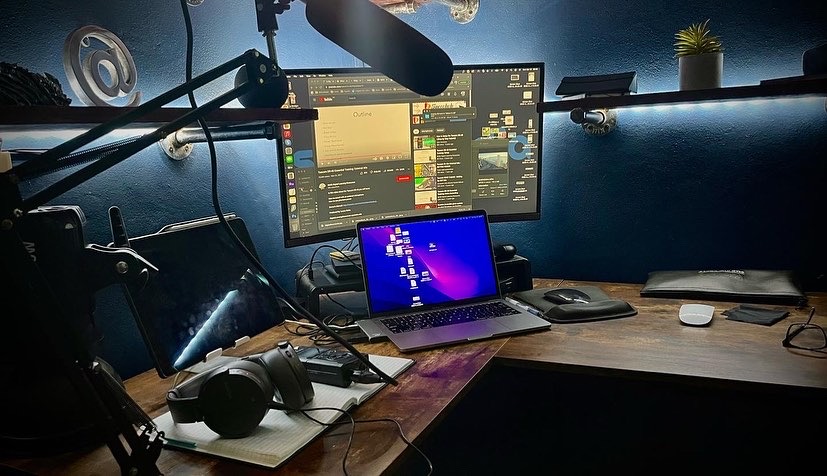
In California, my home office was set up with multiple monitors, high-speed internet, and a mobile device—essential tools back in those days and more so now. It was from that setup that I worked for three different clients, managing projects and building creative solutions while miles away from their physical offices. Each of these clients came with unique challenges and dynamics, but we found common ground through technology. We weren’t just doing our work; we were demonstrating a new way of working, long before “remote work” was a common phrase.
From Dial-Up to High-Speed: Innovating New Tools
One of the most significant contributions our generation made was in refining and popularizing the tools necessary for remote work. We were the first to use early versions of email, FTP servers for transferring large files, and basic video conferencing tools. We watched as email transitioned from a clunky novelty to an essential business communication tool and as the first chatrooms evolved into real-time messaging apps. This era of innovation meant that if a tool wasn’t available, we often helped create it.
For example, the birth of software like ICQ and MSN Messenger showed us how real-time communication could bridge the physical gap between team members. When I was working remotely in the early 2000s, these tools felt revolutionary. Being able to chat with clients and team members, despite the distance, fundamentally changed how we communicated, allowing collaboration in a way that was unimaginable only a decade prior.
We were early adopters, yes, but we were also influencers in pushing for advancements in these tools. As we embraced technology, we provided feedback to developers, identified gaps, and contributed to evolving platforms into the comprehensive, collaborative tools they are today. In many ways, the digital solutions of the 2020s owe a debt to those of us who worked from home, experimenting with every new tool and software that hit the market.
The Work-Life Balance Revolution
What also set Gen X apart was our recognition of the importance of work-life balance. Growing up as a latch-key kid myself, we saw how previous generations often sacrificed their personal lives for their careers, or “the gridn” as its been labelled. Long hours at the office and grueling commutes were standard for our parents and mentors, but we were keen to forge a different path. This didn’t mean we lacked ambition, but we valued integrating work into our lives rather than letting it dominate our every waking moment.
For me, the flexibility of working from home meant more time for my passions—self-care, spending time at the beach, and being outdoors. Being based in California allowed me to create a schedule that prioritized both work and life. I remember mornings when I’d take a walk along the shoreline, soaking in the calm before heading home to dive into the day’s tasks. This freedom wasn’t just about flexibility; it was about finding balance, something I had seen so many struggle with in traditional office roles.
Leading the Way: Advocating for Change
As we advanced in our careers, many of us transitioned into leadership roles within our organizations. We were in a unique position, having firsthand experience of the benefits of remote work while also recognizing its challenges. This gave us the credibility to advocate for remote work policies and implement them within our teams.
I remember when I first took on a managerial role while working remotely. There were still lingering doubts from some team members and leadership about whether remote workers could remain as productive as their office-based counterparts. But having already proven myself, I was in a position to challenge those assumptions. I started encouraging flexible work arrangements within my team and implemented regular video meetings and clear deliverable timelines to keep everyone aligned. Slowly but surely, I saw the doubts start to fade, replaced by an appreciation of the increased productivity and morale that remote work enabled.

The Birth of Digital Nomads: Our Legacy in a New Era
Today, we often hear about the “digital nomad” lifestyle—a term that didn’t exist when we started working remotely. Back then, we weren’t sipping lattes at beachfront cafes in Bali or hopping between co-working spaces in Lisbon. We were doing something simpler, yet just as revolutionary: proving that you could work from anywhere. Whether it was from a home office, a café with a clunky laptop, or a makeshift desk in the corner of a studio apartment, we showed the world that “work” wasn’t defined by a place, but by results.
The explosion of digital nomads and remote-first companies in recent years is a direct consequence of the groundwork laid by Gen X. We proved that it was possible to live life on our own terms, prioritizing experiences, flexibility, and personal fulfillment without sacrificing our careers. As we pioneered this path, we created a ripple effect that resonated across generations, giving rise to the modern gig economy and the broad acceptance of remote work as a standard option.
Looking Back, Moving Forward
As I look back on our journey, I’m proud of the role we played in reshaping the modern workplace. We didn’t have a roadmap, nor did we set out to create a revolution. We were simply trying to adapt to a rapidly changing world and find a better way to live and work. From the early days of dial-up modems to today’s high-speed broadband, we navigated the challenges and embraced the opportunities that technology provided. Along the way, we made remote work not just a possibility, but a preferred way of life.
In conclusion, Generation X’s contribution to remote work isn’t just about being early adopters of technology or pioneers of telecommuting. It’s about challenging the status quo and seeking better solutions to age-old problems. We were the generation that saw the future in every new technological advance, embraced the idea of work-life balance, and pushed forward with the conviction that work shouldn’t define us—it should enable us to live life on our own terms.
And as we look forward, it’s clear that our journey is far from over. The landscape of work continues to evolve, and we remain at the forefront, advocating for even greater flexibility, inclusivity, and balance in our professional lives. After all, if there’s one thing our experience has taught us, it’s that the only constant is change—and we’re ready to keep adapting, just as we always have.