Author: admin

  • How Gen X Drove Remote Work

    How Gen X Drove Remote Work

    The Rise of Remote Work: Gen X’s Pivotal Role in Shaping a New Way to Work

    history of remote work

    As members of Generation X, those of us born between the mid-1960s and early 1980s, played a foundational role in the evolution of remote work. We were a generation that not only witnessed, but actively embraced, the transformative rise of technology, and in doing so, helped carve out the path for what we know today as the remote work revolution.

    The Early Days: A Tech-Driven Revolution

    Growing up during the rise of personal computers, we experienced a technological shift like no generation before us. From the Commodore 64 and IBM PCs to the early dial-up days of AOL and Compuserve, we were there, riding the wave of innovation. This exposure to technology wasn’t merely a passing trend; it was an awakening to new possibilities. As personal computers became household staples and the internet slowly gained traction, the notion of traditional 9-to-5 office-based work started to feel increasingly unnecessary.

    For me, this was a transformative period. Starting my career in Toronto in the late ’90s, I saw firsthand how technology could bridge physical distances. By the early 2000s, living in California, I had transitioned into working from home part-time. But back then, the idea of working from a home office was still unconventional. I remember my first fully remote role in 2000 when I left Webkrew and began working with a client who was only a few years younger than me. This client, and others like him, understood the value of working out of a home office, leveraging technology to stay connected and productive. More and more I knew the office life was not mine.

    Battling Skepticism: Breaking Through Boomer Mentality

    One significant hurdle we faced as early remote workers was the skepticism from older generations in leadership positions. Many CEOs and managers, predominantly Boomers, had grown up in a world where work meant being physically present at an office. This mindset made advocating for remote work arrangements a challenge, as it seemed to contradict everything traditional leadership had been taught about managing teams and tracking productivity.

    However, those of us who saw the potential in remote work continued to push for change. It wasn’t an easy road. Convincing leadership to let us work from home involved more than just demonstrating that we could connect to servers and manage our tasks remotely; it meant showcasing that productivity wasn’t confined to the walls of an office. It meant proving that the flexibility we gained through remote work didn’t hinder our efficiency but enhanced it.

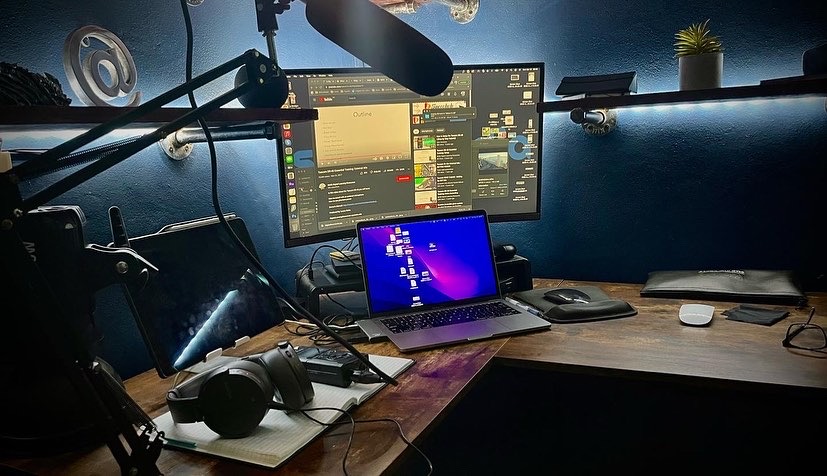
    In California, my home office was set up with multiple monitors, high-speed internet, and a mobile device—essential tools back in those days and more so now. It was from that setup that I worked for three different clients, managing projects and building creative solutions while miles away from their physical offices. Each of these clients came with unique challenges and dynamics, but we found common ground through technology. We weren’t just doing our work; we were demonstrating a new way of working, long before “remote work” was a common phrase.

    From Dial-Up to High-Speed: Innovating New Tools

    One of the most significant contributions our generation made was in refining and popularizing the tools necessary for remote work. We were the first to use early versions of email, FTP servers for transferring large files, and basic video conferencing tools. We watched as email transitioned from a clunky novelty to an essential business communication tool and as the first chatrooms evolved into real-time messaging apps. This era of innovation meant that if a tool wasn’t available, we often helped create it.

    For example, the birth of software like ICQ and MSN Messenger showed us how real-time communication could bridge the physical gap between team members. When I was working remotely in the early 2000s, these tools felt revolutionary. Being able to chat with clients and team members, despite the distance, fundamentally changed how we communicated, allowing collaboration in a way that was unimaginable only a decade prior.

    We were early adopters, yes, but we were also influencers in pushing for advancements in these tools. As we embraced technology, we provided feedback to developers, identified gaps, and contributed to evolving platforms into the comprehensive, collaborative tools they are today. In many ways, the digital solutions of the 2020s owe a debt to those of us who worked from home, experimenting with every new tool and software that hit the market.

    The Work-Life Balance Revolution

    What also set Gen X apart was our recognition of the importance of work-life balance. Growing up as a latch-key kid myself, we saw how previous generations often sacrificed their personal lives for their careers, or “the gridn” as its been labelled. Long hours at the office and grueling commutes were standard for our parents and mentors, but we were keen to forge a different path. This didn’t mean we lacked ambition, but we valued integrating work into our lives rather than letting it dominate our every waking moment.

    For me, the flexibility of working from home meant more time for my passions—self-care, spending time at the beach, and being outdoors. Being based in California allowed me to create a schedule that prioritized both work and life. I remember mornings when I’d take a walk along the shoreline, soaking in the calm before heading home to dive into the day’s tasks. This freedom wasn’t just about flexibility; it was about finding balance, something I had seen so many struggle with in traditional office roles.

    Leading the Way: Advocating for Change

    As we advanced in our careers, many of us transitioned into leadership roles within our organizations. We were in a unique position, having firsthand experience of the benefits of remote work while also recognizing its challenges. This gave us the credibility to advocate for remote work policies and implement them within our teams.

    I remember when I first took on a managerial role while working remotely. There were still lingering doubts from some team members and leadership about whether remote workers could remain as productive as their office-based counterparts. But having already proven myself, I was in a position to challenge those assumptions. I started encouraging flexible work arrangements within my team and implemented regular video meetings and clear deliverable timelines to keep everyone aligned. Slowly but surely, I saw the doubts start to fade, replaced by an appreciation of the increased productivity and morale that remote work enabled.

    The Birth of Digital Nomads: Our Legacy in a New Era

    Today, we often hear about the “digital nomad” lifestyle—a term that didn’t exist when we started working remotely. Back then, we weren’t sipping lattes at beachfront cafes in Bali or hopping between co-working spaces in Lisbon. We were doing something simpler, yet just as revolutionary: proving that you could work from anywhere. Whether it was from a home office, a café with a clunky laptop, or a makeshift desk in the corner of a studio apartment, we showed the world that “work” wasn’t defined by a place, but by results.

    The explosion of digital nomads and remote-first companies in recent years is a direct consequence of the groundwork laid by Gen X. We proved that it was possible to live life on our own terms, prioritizing experiences, flexibility, and personal fulfillment without sacrificing our careers. As we pioneered this path, we created a ripple effect that resonated across generations, giving rise to the modern gig economy and the broad acceptance of remote work as a standard option.

    Looking Back, Moving Forward

    As I look back on our journey, I’m proud of the role we played in reshaping the modern workplace. We didn’t have a roadmap, nor did we set out to create a revolution. We were simply trying to adapt to a rapidly changing world and find a better way to live and work. From the early days of dial-up modems to today’s high-speed broadband, we navigated the challenges and embraced the opportunities that technology provided. Along the way, we made remote work not just a possibility, but a preferred way of life.

    In conclusion, Generation X’s contribution to remote work isn’t just about being early adopters of technology or pioneers of telecommuting. It’s about challenging the status quo and seeking better solutions to age-old problems. We were the generation that saw the future in every new technological advance, embraced the idea of work-life balance, and pushed forward with the conviction that work shouldn’t define us—it should enable us to live life on our own terms.

    And as we look forward, it’s clear that our journey is far from over. The landscape of work continues to evolve, and we remain at the forefront, advocating for even greater flexibility, inclusivity, and balance in our professional lives. After all, if there’s one thing our experience has taught us, it’s that the only constant is change—and we’re ready to keep adapting, just as we always have.

  • Past Present and Future of Remote Work

    Past Present and Future of Remote Work

    Remote work, also known as telecommuting or teleworking, has been evolving for several years. The term refers to a type  work arrangement where employees are not required to be physically present in a traditional office space. These workers can choose to instead work from home, a co-working space, or any other location with a stable internet connection. Remote work has become increasingly popular in recent years, with many companies adopting this practice as a viable alternative to the 9-5 office job. 

    Early Adopters of Remote Work Practices?

    There were. few industries early to embrace this practice. The technology, finance, and customer service industries specifically. In the early 2000s the practice of working remotely really took off. The proliferation of high-speed internet and digital communication tools,  including advances in technology, changing attitudes towards work-life balance, and the increasing demand for flexible work arrangements created the flexibility for more remote positions.

    Let’s face it, many employees today place a higher value on work-life balance and only seek out remote work as a way to achieve this goal. The COVID-19 pandemic also accelerated this trend towards remote work, as many companies were forced to adapt to a remote work model to maintain business continuity during lockdowns and social distancing measures.

    Sam’s Story

    As someone who has been working remotely as a digital marketer, since the year 2000 I have experienced firsthand how this practice has evolved over time. When I first started, the tools we had available for connecting to servers and running programs were quite limited compared to what we have today. However, even then, it was clear that remote work was a viable option for many businesses.

    One of the most significant factors driving the growth of remote work has been the continued advancement of technology. Today, we have access to a wide range of software and tools that make it easier than ever to work from anywhere in the world. For example, video conferencing tools like Zoom and Google Meet have made it possible to have face-to-face meetings with colleagues and clients from the comfort of your own home. Cloud-based collaboration tools like Google Docs and Dropbox have made it possible to share files and work on projects with colleagues in real-time, no matter where they are located. And communication tools like Slack and Skype have made it easier than ever to stay connected and collaborate effectively from a distance..

    Another factor that has influenced the growth of remote work has been the rise of travel bloggers and creators. As more and more people began to work remotely, many of them also began to document their travels and share their experiences online. This helped to create a sense of community and shared experience around remote work, and also served to inspire others to try it out for themselves. It also opened up the commerce system to more advanced freelance or gig work.

    Throughout my career, I have utilized a range of tools and technologies to stay connected with colleagues and clients and collaborate effectively from a distance. This has included video conferencing, cloud-based collaboration tools, and project management software, among others. By leveraging these tools effectively, I have been able to work from a variety of locations while experiencing more of life. 

    Of course, the rise of remote work has not been without its challenges. One of the biggest challenges that remote workers face is the need for effective time management. When working from home or another remote location, it can be easy to get distracted by household chores, social media, or location specific adventures.

    To combat this, many remote workers create a dedicated workspace that is free from distractions, set clear boundaries between work and personal time, and use productivity tools like Pomodoro timers to stay on task.

    Another challenge that remote workers face is the need for effective communication. When working remotely, it can be more difficult to pick up on nonverbal cues and to build relationships with colleagues and clients. To address this, many remote workers make a point to check in regularly with their colleagues and clients, using video conferencing tools and other communication channels to stay connected and build rapport.

    In my own experience as a remote worker, I have found that one of the most significant benefits is the ability to work from anywhere in the world. This has allowed me to travel extensively while still being able to stay connected with my clients and colleagues. For example, last year, I spent several months working from Bali, where I was able to enjoy a change of scenery and immerse myself in a new culture while still being able to meet all of my work obligations.

    Another benefit of remote work that I have experienced is the ability to work on a more flexible schedule. As a digital marketer, much of my work can be done independently, which allows me to set my own hours and work at times that are most productive for me. This has allowed me to achieve a better work-life balance and to pursue other interests outside of work, such as writing and photography

    I am excited to see the continued growth of this practice and the many benefits it offers for businesses and employees alike. Whether it is increased productivity, lower overhead costs, or greater work-life balance, there is no denying the value that remote work can bring to the table. And with advances in technology and the influence of travel bloggers and creators, I believe that remote work will only continue to become more popular and prevalent in the years to come.

    One of the industries that was quick to adopt remote work was online entertainment, where companies like Netflix and Amazon Prime Video were able to thrive by selling products and services to subscribers without the need for a physical office or storefront. This was a clear demonstration of the potential for remote work to offer greater flexibility and convenience for both businesses and workers alike.

    Overall, remote work has become a valuable tool for businesses of all sizes and industries, offering a range of benefits such as increased productivity, lower overhead costs, and greater flexibility for employees. With the continued advancement of technology and the growing demand for work-life balance, it is likely that remote work will continue to play a significant role in the future of work.

  • 5 Ways to Build an Email List

    5 Ways to Build an Email List

    The Best 5 Strategies to Build a Targeted Email List for Your Brand Product or Service

    Building an email list is a key aspect of marketing your brand, products or services online.With these strategies youare on your way to building a qualified list. Let’s dive into each method with a real-life example that illustrates how each can work for you.

    webfomrEample
    1. Opt-In Forms: Simplify Sign-Ups
      Opt-in forms are a straightforward way to encourage visitors to join your email list. Place them strategically on your website or product pages and offer a compelling incentive, like a discount or free download, to entice sign-ups. Here’s an example of an opt-in form featuring an incentivized offer:

      Imagine you run an online boutique selling handmade jewelry. You want to collect the email addresses from the visitors to your websiteOn your website, you feature an opt-in form offering a 15% discount to new subscribers. A visitor browsing your site comes across the form while admiring your collection and decides to sign up to receive the discount. Not only have you gained a new subscriber, but you’ve also incentivized them to make a purchase with their exclusive discount.

    2. Content Upgrades: Offer Value
    Enhance your email list with valuable content upgrades, such as ebooks or guides, offered exclusively to subscribers. Provide a visual teaser, like an ebook cover, to showcase what subscribers can expect.

    Let’s say you’re a fitness coach specializing in at-home workouts. You create a comprehensive guide to “30 Days to a Healthier You” and offer it as a content upgrade to subscribers. Visitors to your website who are interested in improving their fitness journey sign up for your email list to receive the guide. They not only gain valuable insights but also see you as an authority in your field, strengthening their trust in your brand.

    Content Strategy concept on notebook with many light bulbs

    3. Social Media: Expand Your Reach
    Let’s say you’re a food blogger sharing delicious and nutritious recipes on your blog. You create visually stunning recipe cards and share them on your social media platforms, inviting followers to subscribe to your weekly newsletter for more recipes and cooking tips. Food enthusiasts intrigued by your mouthwatering creations eagerly sign up for your newsletter to receive regular updates. With engaging visuals and enticing content, you expand your reach and grow your email list organically. Imagery suggestion: A captivating social media post featuring a recipe card and a call-to-action.


    4. Referral Programs: Incentivize Sharing
    You’re the owner of a subscription-based grooming products company. To encourage word-of-mouth referrals, you introduce a referral program where existing subscribers can earn a free product for every friend they refer who signs up. One of your satisfied customers shares their referral link with their social circle, and several friends sign up for subscriptions. Not only do you gain new subscribers, but you also reward loyal customers for spreading the word about your brand. Imagery suggestion: A graphic promoting the referral program with clear instructions.

    5. Webinars: Educate and Engage
    As a software company, you decide to host a webinar titled “Mastering Productivity: Tips for Remote Teams.” You promote the webinar across your social media channels and through targeted email campaigns. Interested professionals in remote work sign up for the webinar to learn valuable strategies for boosting productivity in their teams. By collecting email addresses during registration, you not only provide value but also grow your email list with engaged prospects interested in your products or services. Imagery suggestion: A promotional graphic highlighting the webinar topic.

  • Integrating AI Into Design Flow

    Crafting a Logo for Tammy and Sam’s RV Adventure Home: CoconutRVAdventures.com

    This summer, my girlfriend Tammy and I will embark on an adventure as remote workers and vloggers, navigating the open road while documenting our experiences as a digital marketer and a traveling nurse. Our home on wheels, a Class C Jayco GreyHawk affectionately named Coconut, inspired the idea to build a website, project to create a logo for the RV and website, CoconutRVAdventures.com. The logo needed to capture the spirit of our upcoming journey.

    As the designer, I was tasked with bringing this vision to life and decided to embrace the challenge of integrating AI into the design process. Here’s my step-by-step guide, blending hand-drawn sketches with the power of Adobe Firefly, Adobe Photoshop and Adobe Express to create a logo that captures the essence of our RV lifestyle and invites others to join our journey.

    Step 1: Sketching Ideas with Procreate

    Being your own client is never easy. I started by sketching logo ideas in Procreate, visualizing the core elements Tammy and I envisioned: RV imagery, tropical beach themes, mountains, camping, and symbols of freedom and travel. Integrating AI into the project brought both excitement and uncertainty. I wanted to ensure the design felt authentically mine, despite concerns about plagiarism and doubts about the final outcome. This sketching process served as the blueprint for the digital work.

    There were additional iterations, but I won’t go into much detail on those sketches as I’ve posted about this process before. Essentially, I start with the first design that stands out. In Procreate, I recorded the process of rough sketching. Back in art school in the early ’90s, this involved using sheets of paper and markers. Procreate allows me to work much faster with no pencils and direct erase.

    For more on my digital drawings and to view a gallery of sketches, check out the article on my personal site. I hope you enjoy it!

    Step 2: Importing to Firefly

    After importing the sketch into Adobe Firefly, using it as a reference for the logo’s structure, I crafted a prompt that I believed would return a cleaner version of my drawing. This was not entirely the case. Though I did get pieces of things I really liked. I was also impressed at how the generation was able to mimic my drawing style. However, back to the prompt.

    The first prompt and results looked like this:
    “create a logo that includes a Class C RV Jayco GreyHawk sitting on a scee that is placedinside and spilling out of a coconut half shell. Looking like it is done in marker the main colours will be teal and purple”

    Additionally, I set the style to “digital art” and the structure with the image reference to “graphic design”. I then clicked the AI’s generation process. This involved refining the prompts over a few attempts to see if I could get a result that aligned with my vision. It was essential to maintain the integrity of my original concept while leveraging AI to enhance and expedite the creative process.

    Step 3: Refining Prompts with ChatGPT

    To enhance the prompts used in Firefly, of course I turned to ChatGPT to refine the instructions. This included describing the specific RV model, emphasizing the use of a vibrant color palette with teal blues and rich purples, and incorporating tropical elements.

    Here is the revised prompt and the results
    “Generate a logo featuring a Class C RV, Jayco GreyHawk, nestled within a scenic backdrop emerging from a halved coconut shell. The style should resemble marker art, with predominant colors of teal and purple.”

    This step helped ensure that the generated logos closely matched the vision for CoconutRVAdventures.com and allowed for greater precision and creativity in the design process.

    It took a few tries with different but fairly similar prompts. The changes were nuanced, like specifying a Ford 450 front grill or the exact model of the RV. Sometimes, I would get a new image and swap out the style to match one of the generated images.

    I was making progress, though not quite there yet. After refining the prompt one final time, I finally got the design I wanted. With that in hand, I moved on to the next stage: taking it into Adobe Express to play around with text and other elements.

    “Generate a logo featuring a coconut half shell containing a beach break wave with a sunset in the background. Include mountains behind the sunset and a palm tree. Make a Class C RV the central focal point within the design”

    Step 4: Refining in Photoshop and Express

    After generating the logo in Firefly, I imported it into Adobe Photoshop for further refinement. This involved cleaning up the design, removing unnecessary backgrounds, and using the generative fill feature combined with more of my pencil work, I was able to enhance and create different elements like the sunset circle in the background. Additionally I was not happy with the RV pictured above. Unfortunately I was not able to screen capture the photoshop work however when I was done I had the following iteration. I was getting so much closer.

    The refined logo was then pulled into Adobe Express to work on the typography, experimenting with different fonts until the perfect match was found that complemented the visual elements of the logo.

    Step 5: Exporting the Final Logo

    Once satisfied with the design, I exported the final logo in high-resolution formats suitable for both web and print. This ensured that CoconutRVAdventures.com had a distinctive and polished logo that effectively represented Tammy and Sam’s adventurous lifestyle.

    Conclusion

    Creating a distinctive logo for CoconutRVAdventures.com using a combination of hand-drawn sketches and advanced AI tools was an exciting journey. If you have thoughts on using AI to generate logos from sketches or opinions on Tammy and Sami’s new logo, let’s start a conversation. Share your insights and let us know what you think about the final design!